Pfizer (NYSE: PFE ) recently announced plans to sell its remaining 80% stake in animal-health company Zoetis (NYSE: ZTS ) after about four months on the public market. Margins and profits aren't as high in the animal health business, which has pushed the world's largest pharmaceutical company to streamline its focus. It also highlights a delicate Catch-22 for Big Pharma.
While animal health companies represent a sizable chunk of total revenue in the dark days of the patent cliff, investors want to see pharma companies focus solely on pharma products to successfully clear the patent cliff. Pfizer ultimately decided to appease the masses. Depending on the success of Zoetis -- and perhaps its parent -- other pharmaceutical companies may decide to release their animal health businesses. That could open up several entirely new long-term investment opportunities for your portfolio.
The one and only?
The animal health business is a $100 billion global opportunity with a $22 billion medicines and vaccines segment that is growing at a CAGR of 6%. That represents the core focus for Zoetis, which has ridden the growth to become the largest animal health businesses in the world. It may be the first to test the public markets, but there are three other closely held companies investors can keep an eye on.
| Zoetis, Pfizer | $4.3 billion | 3% | 7.3% |
| Merck Animal Health, Merck (NYSE: MRK ) | $3.4 billion | 4.5% | 7.2% |
| Merial, Sanofi (NYSE: SNY ) | $2.9 billion | 3.1% | 6.2% |
| Elanco, Eli Lilly (NYSE: LLY ) | $2.0 billion | 21% | 9% |
Source: Company 2012 SEC filings.
Merck has made a big push to keep Merck Animal Health on the fast track for growth and recently announced plans to relocate the division from the Netherlands to its New Jersey campus. The company hopes the move creates a more efficient business by bringing 300 employees into closer quarters and reducing costs. It also brings the company closer to America's massive cattle farms, for which Merck Animal Health offers dozens of products.
Merial was founded in 1997 as a joint venture between Merck and Sanofi, but it was bought outright by Sanofi a few years ago for $4 billion (after Merck assumed the Intervet/Schering-Plough Animal Health business in its merger with the company). Considering that Zoetis, albeit a bit larger, is now worth $16.5 billion that move could pay off tremendously. With well-known companion products such as Frontline and Heartgard and dozens of products for livestock and horses, Merial should continue to grow comfortably in the years ahead.
And finally investors have Elanco, which is smaller but growing like a mangrove tree. Couple its growth with the fact that it represents 9% of Eli Lilly's total sales and it is easy to see why CFO Derica Rice flatly rejected the notion that it would consider a spinoff. Instead, the parent is pushing the company into major growth opportunities in emerging markets. I wouldn't expect the company to grow at a 21% clip for the next few years, but I wouldn't be surprised to see it ascend the list above.
Forbidden: patent cliffs and insurers
You may question why an animal health business belongs in your portfolio at all. Although margins may be lower than human pharmaceutical businesses there are several key advantages. Animal health companies don't have to face generic competition or deal with pesky insurers -- two of the biggest risks juggled by Big Pharma. It also helps that livestock vaccines represent a relatively small cost for the food industry and pay big dividends for productivity, so farmers don't question their usage.
Foolish bottom line
Unfortunately, investors looking to get into these businesses must invest in their pharmaceutical parents or simply wait for an IPO. There are no current plans for Merck Animal Health, Merial, or Elanco to go public, but I think investors will see these companies sport tickers of their own in the not-too-distant future. If that does happen you should consider an investment. The industry is enormous, growing, and relatively stable. Besides, if Roofus gets sick you'll probably pay whatever veterinarian bill comes your way to get him back into top mailman-chasing shape. It only makes sense to take advantage of these investment opportunities.
One more big advantage: animal health companies get to steer clear of Obamacare, which will undoubtedly have far-reaching effects. The Motley Fool's new free report "Everything You Need to Know About Obamacare" lets you know how your health insurance, your taxes, and your portfolio will be affected. Click here to read more.


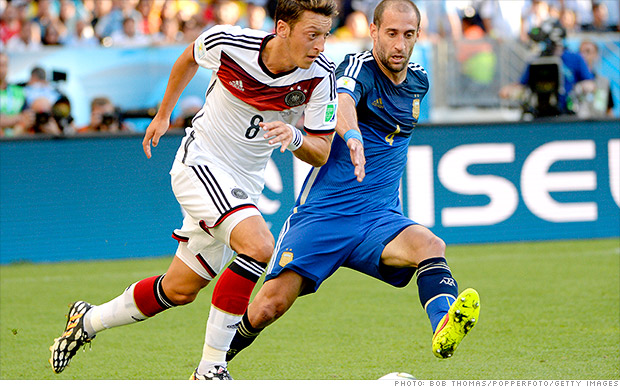 Germany was wearing Adidas when it beat Argentina to win the 2014 World Cup. LONDON (CNNMoney) Hot on the heels of World Cup success, Adidas has landed one of the most prized sponsorships in sports: Manchester United will wear its logo for the next 10 years.
  Nike 1, Adidas 0
  Koichi Kamoshida/Bloomberg via Getty Images DETROIT -- Faulty air bags -- which have already led to the recall of millions of cars worldwide -- are blamed for a new round of recalls in the U.S. The National Highway Traffic Safety Administration, the government's auto safety agency, said Monday that BMW, Chrysler, Ford (F), Honda (HMC), Mazda, Nissan and Toyota (TM) will recall cars sold in places where hot, humid weather can potentially affect the air bags. The older-model cars have air bag inflators that can rupture. If that happens, the air bags might not work properly in a crash, and shards from the broken system could fly out and cause injury. The automakers all have air bag systems made by Takata Corp., a Tokyo-based supplier of seat belts, air bags, steering wheels and other auto parts. NHTSA opened an investigation this month after getting six reports of air bags rupturing in Florida and Puerto Rico. Three people were injured in those cases. It had estimated 1.1 million vehicles automakers in the U.S. could be affected, but the total is likely to climb. Honda, for example, said it will include 10 states and territories in its recall, including Texas, Georgia and South Carolina. Honda says Takata recommended recalling cars in four places: Florida, Hawaii, Puerto Rico and the U.S. Virgin Islands. The government says it wanted to act quickly in warm states while it continues to investigate the issue. "Based on the limited data available at this time, NHTSA supports efforts by automakers to address the immediate risk in areas that have consistently hot, humid conditions over extended periods of time," the agency said in a statement. Honda says too much pressure may be building up in the system, causing the air bags to deploy with too much force. In one complaint last August, a Honda driver's lawyer told NHTSA that the car was in a crash, and both driver and passenger air bags inflated. The driver's air bag inflator ruptured "and propelled a one-inch piece of shrapnel into the driver's right eye." The driver lost sight and suffered cuts requiring 100 stitches to close, the complaint said. Takata's air bags have been the subject of multiple recalls in recent months. In April 2013, Toyota, Honda and Nissan recalled nearly 3.4 million older-model vehicles worldwide due to a problem with the propellant in the air bags that could lead to fires. But Takata recently realized that recall didn't include all of the potentially faulty air bags. Earlier this month, Toyota recalled 2.27 million more cars globally. And on Monday in Japan, Honda, Mazda and Nissan together recalled nearly 3 million more. NHTSA said automakers who use airbags made by Takata will repair the vehicles for free, and in most cases replace both the driver's side and passenger side air bag inflators. All of the automakers except Honda are limiting the recalls to Florida, Hawaii, Puerto Rico and the U.S. Virgin Islands, on the advice of Takata. The following automakers and vehicles will be included in the recall, according to letters sent to NHTSA by the various automakers: BMW: BMW 2001-2005 3 Series sedan, 2001-2006 3 Series coupe, 2001-2005 3 Series sports wagon and 2001-2006 3 Series convertible. BMW says it has not yet determined how many vehicles are affected. It will begin notifying owners in August. Chrysler: Chrysler is still determining which vehicles are affected. Ford: Ford expects to recall 58,669 vehicles, including the 2005-2007 Mustang, 2005-2007 GT and 2004 Ranger pickup truck. Ford said it is still working on a schedule to notify owners. Honda: Honda will recall vehicles in Florida, Hawaii, Puerto Rico and the U.S. Virgin Islands as well as Alabama, Georgia, Louisiana, Mississippi, South Carolina and Texas. The company hasn't yet determined the number of vehicles, but believes it is more than 1 million. Honda will replace the driver's side air bag inflator in the 2001-2007 Accord (four-cylinder engine), 2001-2002 Accord (V6), 2001-2005 Civic, 2002-2006 CR-V, 2003-2011 Element, 2002-2004 Odyssey, 2002-2007 Pilot, 2006 Ridgeline, 2003-2006 Acura MDX and 2002-2003 Acura TL/CL. The company will replace passenger side air bag inflators in the 2003-2005 Accord, Civic, CR-V, Element, Odyssey, Pilot; the 2003-2005 Acura MDX and the 2005 Acura RL. Mazda: Mazda expects to recall 34,600 vehicles, including the 2003-2007 Mazda6, 2004-2008 RX-8, 2006-2007 Mazdaspeed6 and 2004 MPV. Mazda is still working on a schedule to notify owners. Nissan: Nissan said it is still determining which vehicles are affected.
 Getty Summer is peak season for most travel, and peak season means peak prices. To enjoy a wonderful summer vacation without the big expense of travel, follow these tips for an enjoyable staycation. Why Skip the Travel? Many of us tend to discount the attractions in our own back yards. It's easy to feel blasé about what's nearby when there's a big, beautiful world out there just waiting to be seen -- places that we can't just hop in the car and drive to anytime. That's a valid point -- but not for every single vacation. With all the other financial needs we have, from saving for retirement to managing our debt, it's better not to bust the budget every time we have a week off by flying across country or going overseas. But that certainly doesn't mean you can't have an awesome week of fun. Among the many benefits of staycations: No stressing over complicated plans in an unfamiliar setting. No layovers, no flight delays and no long plane rides with screaming kids. More time to enjoy your plans because you will spend less time traveling. Hundreds, if not thousands of dollars saved. Be a Tourist in Your Own Town
 Eric Risberg/AP
 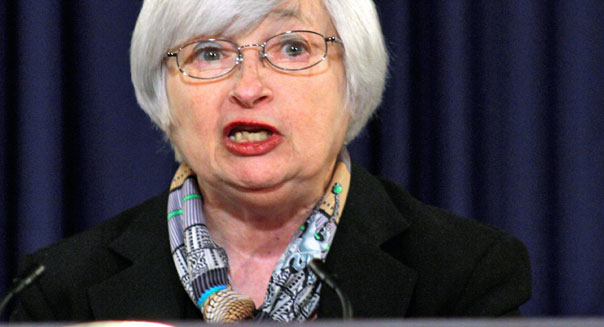 The Asahi Shimbun via Getty ImagesFederal Reserve Chair Janet Yellen Federal Reserve Chair Janet Yellen, easing investor concern that interest rates may rise earlier than previously forecast, said the world's biggest economy will need Fed stimulus for "some time." Yellen said Monday the Fed hasn't done enough to combat unemployment even after holding interest rates near zero for more than five years and pumping up its balance sheet to $4.23 trillion with bond purchases. "This extraordinary commitment is still needed and will be for some time, and I believe that view is widely shared by my fellow policy makers," Yellen said at a community development conference in Chicago. "The scars from the Great Recession remain, and reaching our goals will take time." Yellen spotlighted as evidence "real people behind the statistics," describing how one person, Vicki Lira, lost two jobs, endured homelessness and now serves food samples part-time at a grocery store. Stocks rose as Yellen underscored the Fed's commitment to spur the economy and put 10.5 million unemployed Americans back to work. Share prices fell on March 19, when she said in a press conference that the Fed might start raising the benchmark interest rate above zero about six months after ending its bond purchase program. Yellen didn't mention a timetable Monday. "It is an indirect pushback," said Ward McCarthy, chief financial economist at Jefferies in New York. "I don't think she could directly contradict what she said at the press conference, so she did the next best thing, which was to paint a picture of a Fed that is going to be accommodative for a long, long time." Fed Policy The Standard & Poor's 500 index (^GPSC) rose 0.8 percent to 1,873.00 at 2:47 p.m. in New York. The yield on two-year Treasury notes, which are sensitive to changes in Fed policy, fell two basis points, or 0.02 percentage point, to 0.43 percent. Large numbers of partly unemployed workers, stagnant wages, lower labor-force participation and longer periods of joblessness show that "there remains considerable slack in the economy and the labor market," Yellen said. Monday's speech shows Yellen is inclined to press on with accommodation to boost employment because she focused on slack in the labor market and didn't mention economic growth or "more hawkish themes" such as the risks from record easing, said Thomas Costerg, an economist at Standard Chartered in New York. "It was dovish and Yellen-esque, but she didn't explicitly backpedal on the six months comment so that's a ghost that will stay in the background," Costerg said. "She didn't explicitly say 'Oh, I made a mistake,' she just stressed the other way, that we need accommodative policy for some time." Economic Performance At her press conference last month, Yellen emphasized that the timing for an increase in the main interest rate hinges on economic performance. The FOMC needs "to see where the labor market is," she said on March 19, adding that if inflation "is persistently below" the central bank's 2 percent goal, "that is a very good reason to hold the funds rate at its present range for longer." Inflation decelerated to a 0.9 percent 12-month pace in February from 1.2 percent in January and has been below the Fed's 2 percent target for almost two years. Yellen's speech Monday included references to "slack," a term also used recently by Bank of England Governor Mark Carney to underscore a pledge to keep interest rates at a record low. Spare Capacity The Fed, which this month dropped its link between low interest rates and a specific unemployment rate, followed a similar move by U.K. policy makers, who in February tied their outlook for borrowing costs to spare capacity in the labor market and other more qualitative measures. "There remains scope to absorb slack further" before raising rates, the BOE said in its quarterly Inflation Report. Yellen, 67, has focused on the labor market and the human cost of unemployment for much of her career as an academic and central bank official. Monday she described two other individuals from the Chicago area along with Lira, saying they "shared their personal stories with me." Dorine Poole lost a claims-processing job and struggled to find work after two years of unemployment, while Jermaine Brownlee, a plumber and construction worker, "scrambled for odd jobs and temporary work" and still makes less than before the recession, Yellen said. "They are a reminder that there are real people behind the statistics, struggling to get by and eager for the opportunity to build better lives," Yellen said. "Their experiences show some of the uniquely challenging and lasting effects of the Great Recession." Full Time Yellen was also clear about what labor-market indicators she is watching aside from the unemployment rate. She mentioned that 7 million people working part-time want to work full time, a share of the work force that is "very high historically." The Fed chief said low numbers of people are quitting jobs "because they worry that it will be hard to find another," adding that gains in labor compensation have been "very low." The FOMC has kept the benchmark interest rate near zero since December 2008 and sought to cut borrowing costs and fuel growth through bond buying that has more than quadrupled its assets to $4.23 trillion. While policy makers have slowed the pace of their monthly asset purchases over the past three gatherings to $55 billion from $85 billion, Yellen said the central bank's "commitment is strong" to helping sustain progress in the job market. Recent Progress "Recent steps by the Fed to reduce the rate of new securities purchases are not a lessening of this commitment, only a judgment that recent progress in the labor market means our aid for the recovery need not grow as quickly," she said. "Earlier this month, the Fed reiterated its overall commitment to maintain extraordinary support for the recovery for some time to come." The FOMC said in a policy statement this month that rates will likely remain low for a considerable time after the bond buying program ends. The committee said it will weigh a "wide range of information," including labor-market measures, in deciding when it will eventually begin raising rates. Unemployment was 6.7 percent in February, up from the 6.6 percent level in January that was the lowest since October 2008. The economy added 175,000 jobs in February, more than economists projected, following the weakest two-month hiring gain in more than a year in December and January.